FMCG · Sales Force Automation
2022–2023
CADI App
Carlsberg Group
Field sales reps across multiple European markets used CADI to manage daily orders. The existing interface created friction in the most critical workflow: the ordering module.
UX Research, Design Systems, Figma

Context
CADI was a field operations tool used by sales reps across 7 markets to manage customer visits, submit orders, and coordinate with support teams. It had been built by successive development teams with no shared design language, no agile process, and no dedicated designer. By the time I joined, the product was past its initial launch and the team was scaling, but the design infrastructure was still at zero.
Carlsberg's global design system, Malty, was in its first version and being optimised for the consumer-facing e-commerce platform. Its constraints were not suited to a field operations tool with dense information and frequent desktop use.
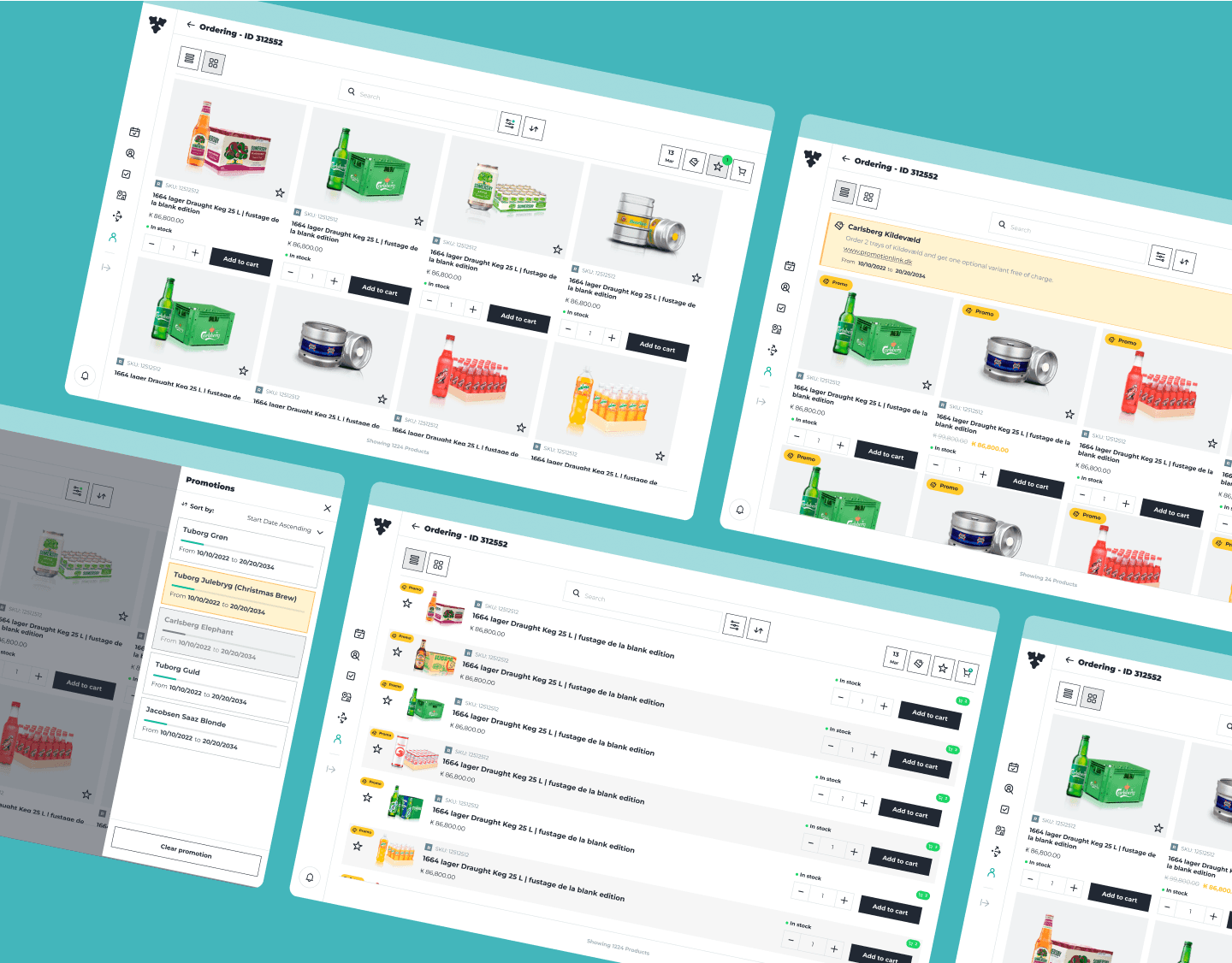
A field operations tool used daily across seven markets: customer visits, order submission, coordination with support teams.
Problem
The ordering module was not my first assignment. I spent the first year building the design infrastructure, establishing ways of working, and developing a shared understanding of what the product actually was across markets. The ordering module became the central focus in year two, when the accumulated research and the platform's structural gaps made it the clearest place to intervene.
The brief as it arrived was to fix the ordering module. The first question the team asked was whether that was the right place to start.
To answer it, we ran a Phase 1 research programme: 12 Sales Manager interviews across 6 markets and a 327-rep survey, triangulated with Google Analytics usage data. I scoped and structured the initiative, but the research was a team effort. What it produced changed the shape of the problem. In Italy's On Trade channel, 97% of order volume moved through reps via CADI. In Finland's Off Trade, that figure was 3.5%. Denmark's reps spent most of their ordering time editing EDI orders placed automatically by large retail chains, correcting stock discrepancies in the field rather than submitting new orders. These were not variations on the same problem. They were structurally different jobs running on the same platform.
The brief was not a UX problem. It was a market strategy question.
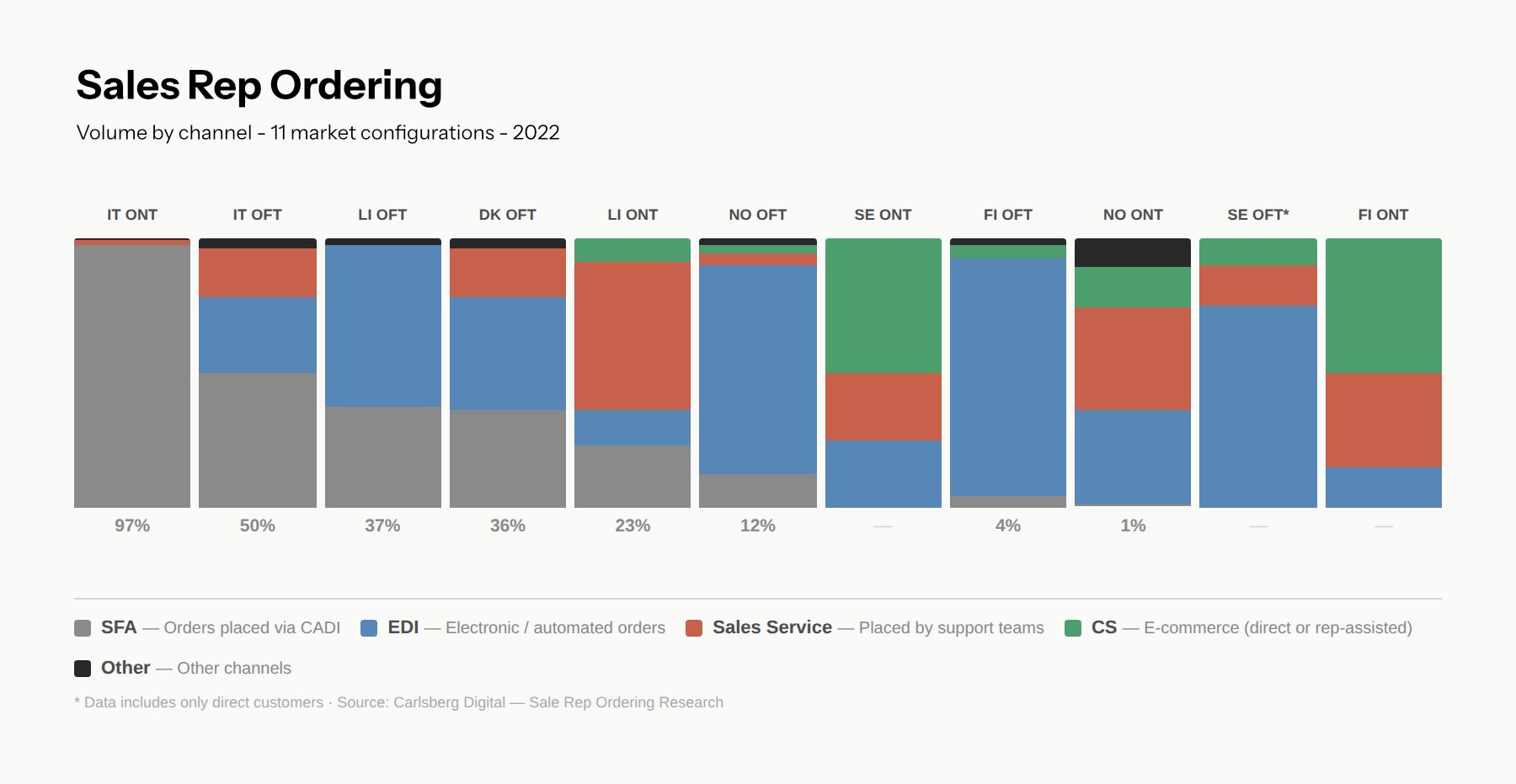
Italy: 97% of On Trade order volume through an SFA application. Finland: 4%. Not variations on the same problem.
Role
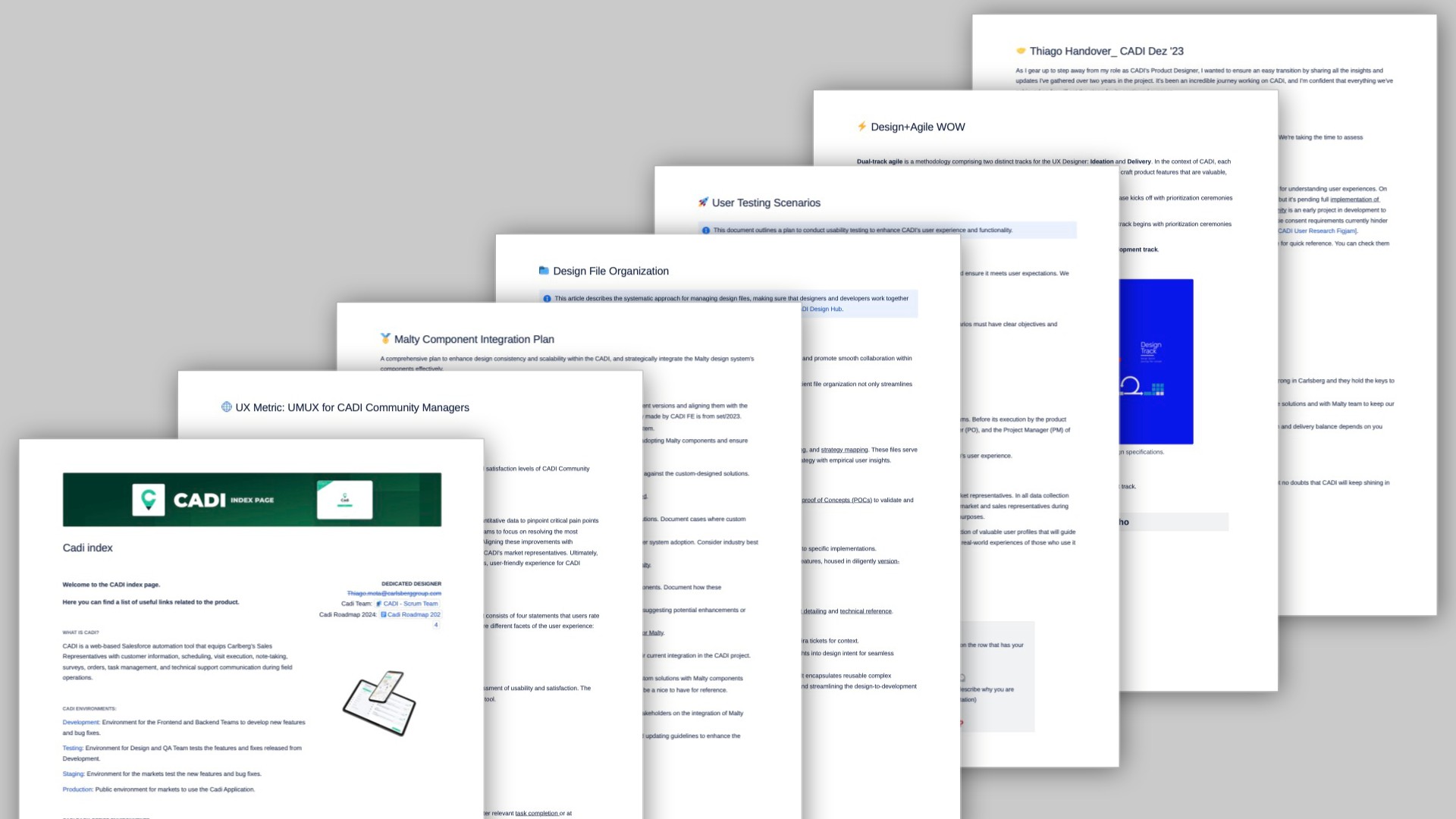
I was the first dedicated product designer the product had seen. Over 22 months, I built the design infrastructure from scratch, established a dual-track agile framework separating ideation from delivery, and ran a multi-market research programme while the product kept shipping. When the project closed, I left a documented handover covering every open thread.
Key decisions
Building against the global design system, deliberately. I had two options: wait for Malty to mature, or adopt it prematurely and ship its constraints into 7 markets. I built a CADI Local Library instead, a child system extending Malty's foundations, with a four-stage integration plan to close the gap as Malty evolved. The cost was managing two parallel systems as a team of one. That was the cheaper cost of the two.
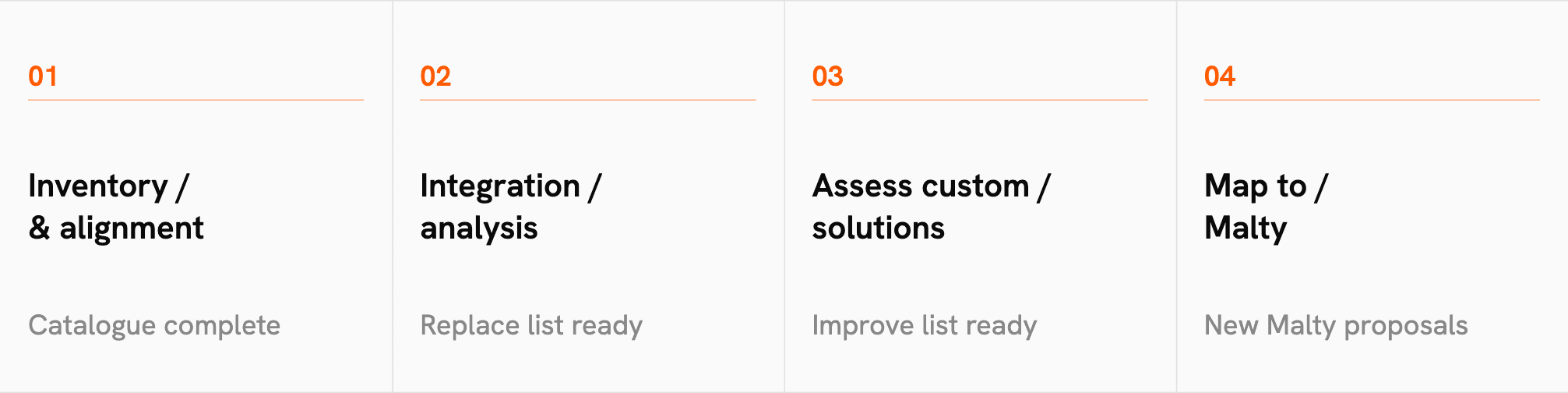
A four-stage plan to close the gap. Managing two systems was the cheaper cost.
Replacing the redesign brief with a framework. Phase 1 produced two outputs. The Ordering Lifecycle mapped the rep's role across four stages (Receive, Create, Edit, Delivery), with the objectives, touchpoints, and SFA functionality relevant at each stage. The Ordering Digitalisation Impact positioned 11 market configurations on a maturity spectrum, identifying which capabilities were relevant at each point and feeding directly into Phase 2 field research selection: Finland as a high-maturity CADI market, Lithuania as a mid-maturity potential market. These frameworks gave the product team a shared model of what reps actually did across markets before a single screen was redesigned.
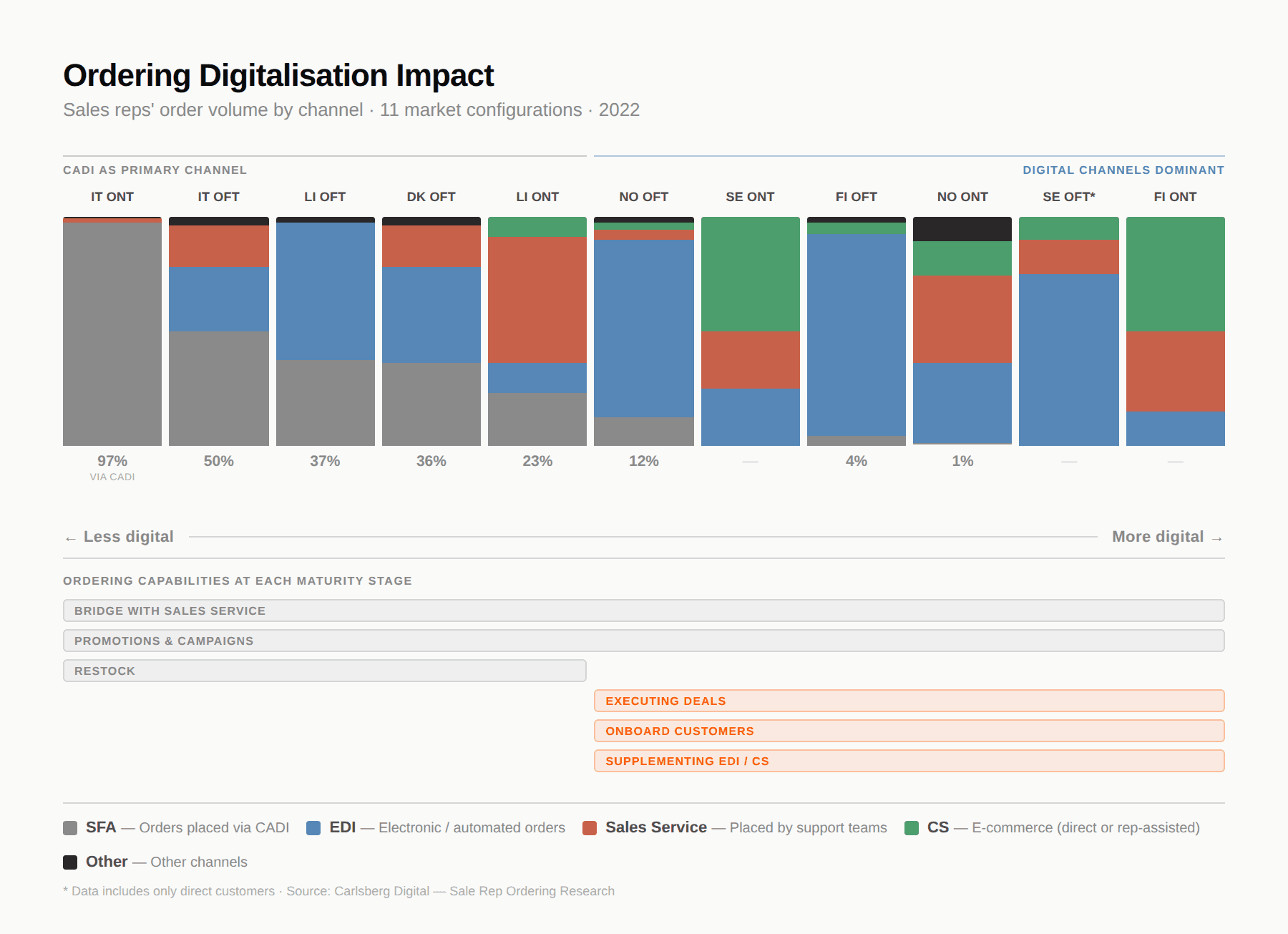
Eleven market configurations. One output that changed what went on the roadmap.
Refactoring the promotions module without waiting for Phase 2. Phase 1 surfaced a structural discrepancy in the promotions interaction. Some markets operated on weekly promotion cycles, with up to 12 active promotions running simultaneously. Others used fixed quarterly promotions with 1 or 2 in effect for an entire season. The existing interface assumed a stable, low-volume structure and broke under the weekly-cycle model. I refactored the promotions UI to be market-agnostic without a second round of field validation. Shipping without Phase 2 confirmation was a calculated risk. It also unlocked downstream product work that depended on the promotions layer being resolved.
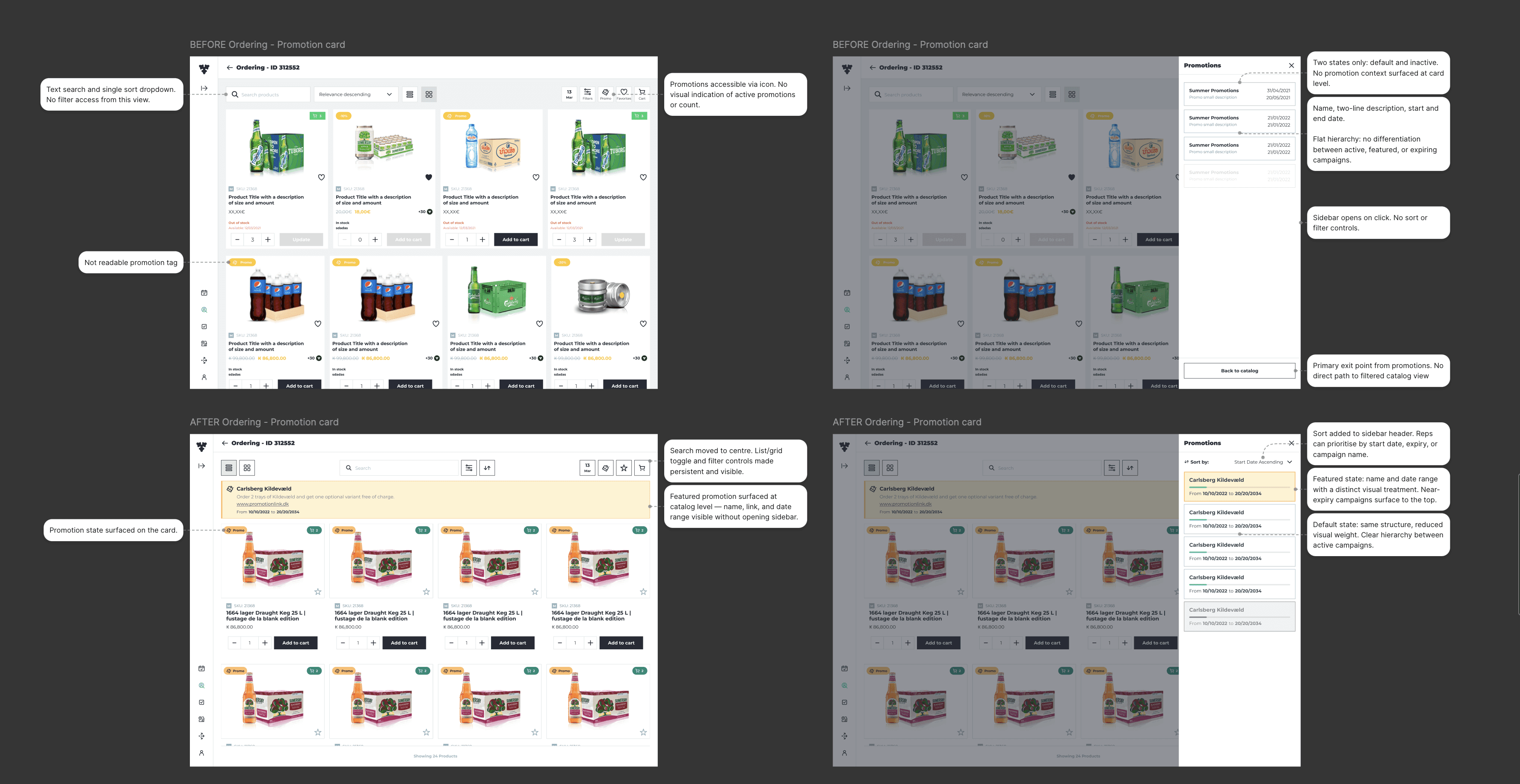
Before: a structure that broke under weekly cycles. After: one implementation for both.
Recognising when a feature is a product definition question. The research kept returning the same pattern. A feature would be proposed, design work would begin, and at some point it became clear the question was not about UX but about what CADI fundamentally was and who it was for. The clearest instance was a proposal to embed visual product presentations inside the ordering module. The operational logic was sound, but putting Carlsberg product materials in front of a retail customer during a visit changed the nature of the tool. CADI was an internal operations product. A customer-facing surface, however narrow, required decisions about governance, content ownership, and product scope that were not within the design team's remit to resolve. The answer each time: escalate, document the open question, park the work.
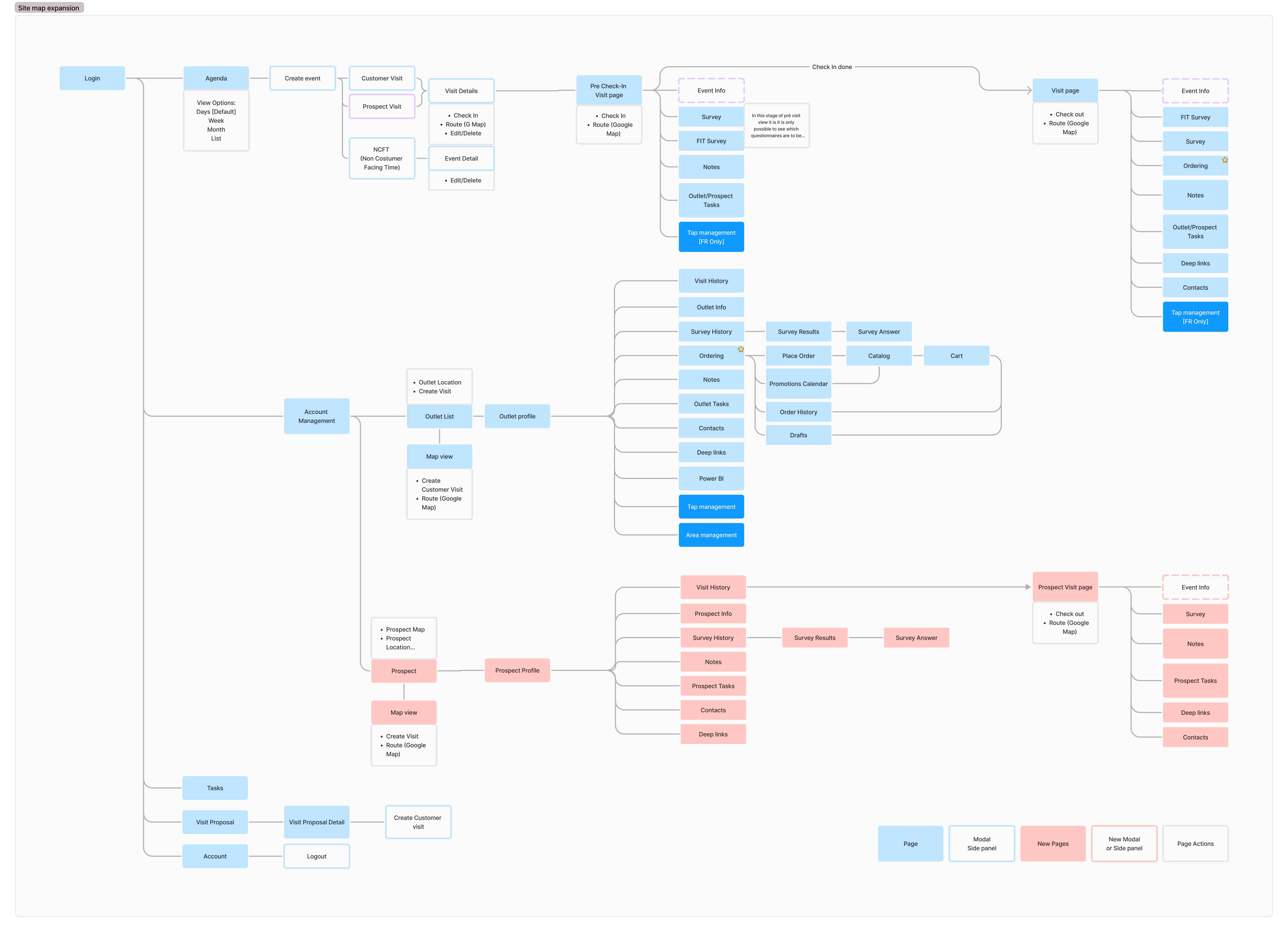
What was built, and what was being considered. The question was whether they were the same product.
Result
The CADI Local Library was in active use. The dual-track agile framework had separated ideation from delivery. The promotions module was live across markets, handling both weekly and quarterly promotion cycles without separate implementations.
The Phase 1 frameworks changed what went on the roadmap. The Ordering Lifecycle gave the team a shared model of what reps actually did across markets. The Ordering Digitalisation Impact drove the selection of Phase 2 field research markets: Finland and Lithuania were chosen on maturity data, not on which markets were most vocal.
The features that raised product definition questions were escalated and documented. None shipped. That was the correct outcome.
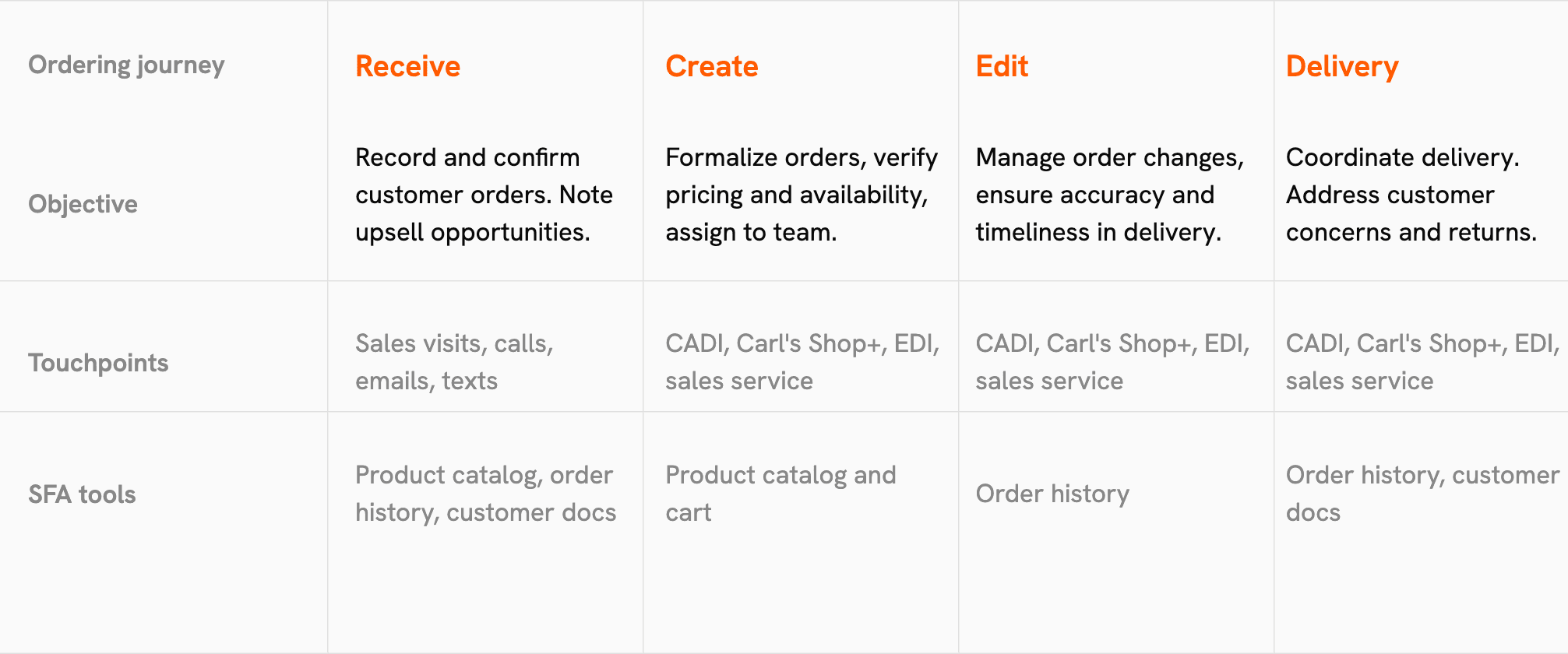
The framework that replaced a redesign brief with a shared model of what reps actually do.
What remains open
In December 2023, the project closed. The ordering module redesign, scoped and research-backed, was placed on the roadmap as the foundation for the next phase of work. The features that had raised product definition questions were documented as legacy items: the right problems identified, the decisions deferred.
I left a handover document covering every open thread: what was done, what was planned, what the next designer would need to continue. In a product that had no prior design infrastructure, operating across 7 markets, that document was the contribution that outlasted the engagement.
The frameworks produced in Phase 1 remain accurate. The questions they raised are the right ones to answer next.